Tampilkan postingan dengan label Music. Tampilkan semua postingan

Sabtu, 22 Oktober 2016

Unknown

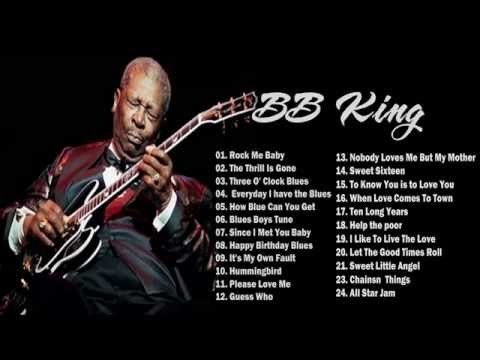
B.B. King - Blues Guitar Music Legend Part 2

By Steve M Herron 

B.B. King - Blues-Guitar-Music-Legend
B.B. King
BB King's guitar style may seem simple, yet upon analysis it discloses a sophisticated awareness of melody, harmony, and rhythm. He seems to always hit the right notes, phrases like no one else, and has a vibrato that is universally recognized. BB approaches the guitar as if it were another voice, not just as an instrument. He plays guitar as if he were singing through it. When he has to take a breath, his guitar does as well. He claims that his sound is not something that he learned, it is just the way he asserts himself as a person and as a guitarist.

Stylistically, what separates BB King from his peers is his firm rooting in the jazz as well as the blues idioms. One of BB's major influences was jazz guitarist Lonnie Johnson, who was one of the first guitarists to visualize the guitar as a single-line solo instrument. BB also listened extensively to Charlie Christian, Django Reinhardt and to horn players such as Lester Young, Johnny Hodges and Bobby Hackett. His blues guitar influence comes primarily from T-Bone Walker. BB softened Walker's somewhat strident style, adding a vibrato that he developed while trying to copy the bottleneck slide guitar sound of his cousin Bukka White. The rest is pure BB King, which is a combination of elements that has produced one of the most distinctive blues guitarists ever!

BB draws from a large pallet of harmonic and melodic devices. Although he is primarily known as a single line player, he does play chords - specifically triads and double stops which he uses to punctuate his solos. Check out his chord intro to the song "Please Love Me" and his rhythm chord comping during the saxophone solo in the song "You Upset Me Baby". Perhaps the most identifiable feature of BB King's sound is his "Bee-Sting" vibrato. He does his vibrato completely from the wrist, as he shakes his whole hand rapidly and evenly. Even though this is a much imitated sound, only BB can make it "sing" the way he does. BB's knowledge of jazz harmony allows him to introduce harmonic concepts into his soloing that are more sophisticated than the typical pentatonic ideas used by most blues guitarists.

The most unique quality of BB King's style is his ability to combine jazzier elements with a rock solid blues sensibility. I was fortunate enough to hear BB King and his big band play live at the Civic Center in Baltimore, Maryland back in 1969. The big band sounded incredible - a real wall of sound - and BB's guitar playing just "wailed" and filled the Civic Center with some of the most exciting blues guitar music I've ever heard. Fortunately, for aspiring blues guitarists there is a wealth of blues guitar tab books available as well as an instructional DVD course taught by BB King himself!


Peabody Conservatory trained guitarist Steven Herron helps people succeed at becoming better guitar players. His company ChordMelody.com features an enormous, unique selection of BB King himself.

Article Source:  B.B. King - Blues Guitar Music Legend Part 2
Read More
Unknown

B.B. King - Blues Guitar Music Legend Part 1

By Steve M Herron

One of my favorite guitarists has always been blues guitar music legend BB King! He is arguably the most influential and certainly the most visible blues guitarist in history. Other famous guitar players such as Eric Clapton, Carlos Santana, Keith Richards, Billy Gibbons and Mike Bloomfield have all acknowledged their debt to BB King. And, BB King's playing today remains just as fresh, vibrant and alive as ever!


Riley King was born in Mississippi in 1925 to Albert and Nora King. His mother left her husband for another man when BB was 4 years old and he was sent to live with his maternal grandmother also in Mississippi without objection from his father. Nora had 2 other husbands and BB was shuffled back and forth between them and his grandmother. His musical education began when he started singing in the Sanctified Church, whose preacher Archie Fair was his uncles' brother-in-law. Archie Fair strummed some gospel guitar songs and gave the curious youngster his first enticing taste of playing on the strings. BB's mother died in 1935 but fortunately not before she could call her 9 year old son to her side before passing.

Afterwards, BB went back to stay with his grandmother and attended the Baptist sponsored Elkhorn School where he continued strengthening his young voice in the gospel choir. When his grandmother died in 1940, the 14 year old tried tenant farming on her land until later that year when he left for the Delta to live with his father and extended family for the next 2 years. By the age of 15 he was already playing on street corners. He had discovered that he could make more money in tips in one day of playing guitar than he could for a whole week's work picking cotton! Soon he was doing singing commercials on Memphis radio stations and from that he moved on to getting his own show. It was at this time that he picked up the nickname "BB" which was short for "Blues Boy".

His popularity continued to grow and eventually he was signed to the RPM record label. His first hit "3 O'Clock Blues" went to Number 1 on the rhythm and blues charts and heralded the arrival of a blues guitar superstar. BB continued touring and recording throughout the fifties, but it wasn't until the sixties that his name became familiar to white audiences. In 1970 he won a grammy award for his monumental hit "The Thrill Is Gone". To this day, he continues to tour over 200 days a year and to record with his band and with other artists as diverse as Larry Carlton and U2. His numerous television and film appearances along with countless awards continue to affirm his stature as an all time blues guitar great. Fortunately, for aspiring blues guitarists there is a wealth of instructional blues guitar tab books as well as a DVD course taught by BB King himself!

Peabody Conservatory trained guitarist Steven Herron helps people succeed at becoming better guitar players. His company ChordMelody.com features an enormous, unique selection of [http://www.chordmelody.com/newpage8.htm]blues guitar tab as well as guitar books and instructional DVDs by BB King himself.

Article Source: [B.B. King - Blues Guitar Music Legend Part 1

Read More
Unknown

Cool Jazz Guitar Playing - Jim Hall Stood Above The Crowd!

By Steve M Herron

Jim-Hall-Stood-Above-The-Crowd
Jim-Hall
Jim Hall was born on December 4, 1930 in Buffalo, N.Y. and as a youngster was surrounded by music. His grandfather played the violin, his mom the piano, and his uncle the guitar. It was his uncle who convinced Hall to take up the guitar at the age of 10. His talent was soon apparent and although it was against union policies, he began to play live in local dance bands at age 13. Like many of the jazz guitar greats of the 1950s and 1960s, it was the recordings of Charlie Christian that first turned Hall's focus towards jazz.

Jim Hall's family relocated to Cleveland, Ohio in 1946. Having actually decided to make a profession in music he got accepted to and later graduated from The Cleveland Institute of Music. It was during this period of time that Hall became familiar with the gypsy jazz guitar virtuoso Django Reinhardt. Reinhardt's recordings influenced the subsequent development of his guitar style. Not pleased with the financial prospects of working as a guitar player in Cleveland, Jim chose to transfer to Los Angeles in 1955.

There he felt he could both earn money and still continue his musical studies at The University of California in Los Angeles. He was also able to study classical guitar, for a short while, with Vicente Gomez. In 1958 drummer Chico Hamilton was forming what was to be the very first of his numerous outstanding jazz quintets. John Graas, the French horn player, recommended Hall to Hamilton. Hall got the job with what ended up to be among the most successful and innovative jazz groups of the day. He stuck with Hamilton for one and a half years.

This association with Chico Hamilton was to be Hall's very first step up the ladder to the top of the jazz guitar tree. Hall received well-earned critical reviews for his part in Giuffre's trio from jazz audiences and critics all over the world. Now established globally as a jazz artist of the highest caliber, Hall was contracted to play with top singers consisting of Ella Fitzgerald and Yves Montand.

In 1960 Hall moved back to New York city. For a while he worked as a studio musician which included a stint with the band on the popular "Merv Griffin Show". Once more back at the top of his game as a jazz guitar player, the early 1970s and late 1960s saw Hall at his creative best. For many years since, Hall has made lots of exceptional recordings with diverse jazz artists. He has appeared in live performances and recorded with bassists Ron Carter and Red Mitchell, trumpeters Art Farmer and Chet Baker, pianists Bill Evans and George Shearing, saxophonists Paul Desmond and Ornette Coleman, in addition to many other top jazz artists.


Several of these recordings have some of the very best jazz guitar playing on record and certainly validate the title often bestowed upon Hall as "The Poet of Jazz". He likewise recorded with a quartet led by pianist Andre Previn backing classical violinist Itzhak Pearlman and also with The Kronos String Quartet. Jim Hall was awarded the prestigious JAZZPAR Prize for 1998. He accepted the honor which included a cash award of roughly $30,000. at the JAZZPAR Prize Gala Concert in Copenhagen, Denmark on April 5, 1998.

Jim Hall is certainly among the most inventive, prominent, and lyrical jazz guitarists in history. While Jim was initially associated with cool jazz and then with hard bop, he always had his own approach along with a very distinct guitar sound. A master of subtlety, he has over the years consistently created fresh concepts, used space effectively, and made every note he played count. Jim hall passed away on December 10, 2013 at the age of 83.

Peabody Conservatory trained guitarist Steven Herron is an expert on jazz guitar books. He has spent most of his adult life playing professionally at clubs and restaurants as well as teaching private students at his studio. Sign up now for his Free Chord Harmonizations Report and find out more about Jim Hall solos.

Article Source:  Cool Jazz Guitar Playing - Jim Hall Stood Above The Crowd!
Read More
Unknown

Jazz Guitar Music Legend Charlie Christian Started It All!

By Steve M Herron 

Jazz-Guitar-Music-Legend-Charlie-Christian
Charlie-Christian
Charlie Christian was born on July 29, 1916 in Bonham, Texas but grew up in Oklahoma City. His dad was a singer/guitarist, his mom a pianist, and they played in a Dallas cinema when he was a youngster. His 2 bothers were also musicians. Christian began his musical career on the trumpet but due to a significant chest condition switched to the guitar at age 12. He also had some understanding of the bass and the piano. Following the family's relocation to Oklahoma City in 1921, Christian senior lost his sight. To make a living he ultimately ended up being a street artist accompanied by his three kids, Clarence on violin and mandolin, Edward on string bass, and Charlie on guitar.

Throughout the early 1930s, Charlie Christian played guitar in his brother Edward's band "The Jolly Jugglers". He first gained broader recognition for his obvious skill in 1937 when he signed up with The Anna Mae Winburn Orchestra. He then played in 1938 with The Alphonso Trent Sextet. Christian became captivated with the electric amplified guitar when he saw Eddie Durham, who played an early variation of the electric instrument. Christian chose to explore the electric amplified guitar. He soon mastered exactly what was then a brand-new instrument.

His reputation on the electric amplified guitar grew very swiftly and jazz enthusiasts came from everywhere to hear his new and pioneering guitar style. His amplified single note lines sounded sometimes like a tenor saxophone. Christian began to introduce numerous pioneering ideas into his jazz improvisations. He utilized augmented and diminished chords in a manner which in the not too remote future would change the world of jazz. His ideas were extremely individualistic and he was a great fan of Django Reinhardt's guitar approach. He enjoyed playing Reinhardt's improvised choruses, note-for-note, on numbers like "St. Louis Blues" and then include some of his own improvised choruses.

In 1939 while playing with The Leslie Sheffield Band he was heard by the influential jazz promoter, John Hammond. He had actually been encouraged by pianist May Lou Williams to travel to Oklahoma City to hear Charlie Christian. Hammond was so amazed he encouraged his brother-in-law, band leader Benny Goodman, to hear Christian. Goodman was originally reluctant to listen to the young guitar player but he eventually agreed to provide him an audition on August 16, 1939 in Los Angeles. It only took a couple of bars of Charlie Christian soloing on "Rose Room" for the fantastic clarinetist to recognize the young guitarist's remarkable ability. Christian was hired on the spot.

In the two years that followed Charlie Christian became a major influence, not only in The Benny Goodman Big Band and Sextet, but likewise on the history of jazz. After playing at night with the Goodman band, Christian would go on to play into the early hours of the morning at Minton's Jazz Club in Harlem. Here he played for hours on end, his creative improvisations straight up influencing other jazz musicians who visited the club including Thelonious Monk, Dizzy Gillespie, Kenny Clarke, Joe Guy, and others. A few of these historical jam sessions luckily were tape-recorded for posterity by Jerry Newman.


Tragically the late nights and Christian's love of the New York night life did not help his health. He had actually experienced poor health for a lot of his life. In the spring of 1940 he was checked in to a medical facility where the medical diagnosis revealed that he had consumption. Despite the medical professionals' warnings he failed to take proper care of his health. In July 1941 he suffered a major relapse and went into The Seaview Sanitarium on Staten Island. He died there in March of 1942.

Peabody Conservatory trained guitarist Steven Herron is an expert on jazz guitar instruction. He has spent most of his adult life playing professionally at clubs and restaurants as well as teaching private students at his studio. Sign up now for his Free Chord Harmonizations Report and find out more about Charlie Christian solos.

Article Source:  Jazz Guitar Music Legend Charlie Christian Started It All!
Read More
Unknown

Produce Your Music At Home - 4 Tips for Producing Your Music at Home

By Traci Crowley 

Producing Your Music at Home
Produce-music-at-home
Thanks to some great advances in technology, it's now possible for any musician to capture their creativity into a recorded song.  The best news is you can record and produce your music from the comfort of your home.  This is not as difficult as you may think, and nowadays you can produce some music that sounds quite professional, without being an expert sound engineer.  Learn 4 Tips for Producing Your Music at Home.

1) Get Your Sound Right Before Recording.

Try to perfect your overall sound before you record your songs.  This minimizes the need for post-recording editing. You also want to make sure you use a good pair of headphones and listen carefully to the input stream coming from the microphones you use. You may need to use a mixer to adjust the frequencies. Also, you will want to be careful not to use too much reverb, because you don't want your input to sound muffled.

2) Learn the Capabilities of Your Recoding Equipment and Software One At a Time, and Try Reading Your Manual.

This will help you avoid getting overwhelmed by all of the technical terms you may not bee too familiar with.  You will also get a better understanding of how to use your recording equipment and software, so you can get the most out of your recording experience...and produce better recordings.  Also, don't forget to read your manual.  Although you may tend to toss your manual aside, you'll be surprised with what you can learn with your manual.  Reading a manual can really speed up your learning curve, so you can begin producing your own music in no time!

3) Finish Your Songs!

If you are like many musicians, you'll find that you have your hard drive full of "beginnings", "openings" and first-halves of songs that you have never finished. You may work on it for a while, then you run out of ideas, or you get bored with it and start working on a new song instead. This is very common, but it is not a great thing to do.

Be disciplined and finish your songs, even if you seem to have lost interest in them. You should hold off on working on a new song until you completely finish your song. Worse case scenario, if you have a great idea for another song, jot down some notes or do a brief sound recording, then come back to it AFTER you finish the song you've been working on. If you don't do this, you are setting yourself up to have several unfinished songs...therefore making it extraordinarily difficult if not impossible for you to reach your creative potential.

4) ALWAYS Create a Backup Copy of Your Music!

The last thing you want to do is create a masterpiece, then lose it all because your system crashes. ALWAYS create a backup copy of your music recordings.  Things happen like power outages, hard drive crashes etc.  Don't let these misfortunes rob the world of your unique music creativity.  ALWAYS backup your music!

To learn more tips about producing your music at home, visit this URL: http://www.indie-musicnetwork.com/recordmusic.html

Traci Crowley provides resources that help you Create, Produce, and Sell your music from home. Visit her website at: http://www.indie-musicnetwork.com and subscribe to her free newsletter for instant tips and tricks for Creating, Producing, and Selling Your Music from home.

Article Source: [] Produce Your Music At Home - 4 Tips for Producing Your Music at Home
Read More

Rabu, 28 September 2016

Unknown

Music Books - The Best Books That Teach You How To Play The Piano

By E. Brooklyn


Piano Book
No matter how many instruments are introduced in the market, along with the technologically improved and played ones; there are a few instruments that you can never forget and one of such instruments is piano. Although the keyboard has replaced the sound of the original instrument, one can never forget the peaceful and soothing tune of this black and white beauty. Hence, there are still many families that send their children to piano classes in order to keep the music alive in them. If you talk about the benefits of learning to play piano, there are many; however, all of them focus on two main advantages - peace of mind and a decrease in the feeling of loneliness.

Although people take up different courses to get a hand in playing piano, there are many books that help you learn this wonderful instrument right at your home. Following are the three books that teach how to play piano and have been voted as the best ones by those who have used them:

"Alfred's teach yourself to play piano":

Alfred is one of the largest educational music publishers in the world and hence the customers have an already existing trust with whatever is published under the name. Starting from the basic lessons to a little advanced ones; this book has lots of pictures that help you learn to play the mind soothing instrument just the way one should. To add to the visual help, it comes with a DVD that teaches you lessons on how to use your fingers on the piano to play your favorite songs, as you sing along.

"How to play the piano - Everything you need to know to play the piano"


Trust us, although the book's name is long, it teaches you the basics of this instrument within a few minutes. Of course, you need patience and time in order to be a perfect beginner in playing the instrument. But every single basic detail is mentioned in the best possible way, so that it's really easy for you to understand the steps and start seeing progress as soon as possible.


The Classic Piano Course Book:


This is not just a book; it has been titled as a "tutor book" by all those who have taken its help to learn their favorite instrument. It starts with an introduction to the instrument, pitching of notes, key signatures and takes the learner to a world of other important aspects that the pianist must be aware of.

A student who has the zeal to give his 100% to learn something, can learn whatever he wishes, even without someone to teach him. However, he grabs the knowledge in a much better, easier and quicker way if there is a proper guide to help him. This is why these 3 best piano learning books may come in handy when you decide to start learning how to play the piano. Of course, the help and guidance of someone with experience in playing the piano would be a great bonus, but as long as you give your best and remain consistent and motivated, you will soon see progress in playing the piano.

Click here, and find out more about the best digital pianos on the market, read full reviews and articles related to this wonderful musical instrument and its music.

Article Source:  Music Books - The Best Books That Teach You How To Play The Piano

Read More

Senin, 26 September 2016

Unknown

Compact Discs Vs Downloadable Applications

By Toyin Orebiyi.


By living in the year 2016, technology has come a long way. One of the many titles I hold is Uber driver, and while on a trip with a passenger, we had a very enlightening conversation about technology within the music and industry. Upon entering my vehicle, I asked him if he wanted to listen to any music from his cell phone because I travel with an axillary cord that I make accessible to passengers. He told me that he did not have any music on his phone and that anything that I wanted to listen to was alright with him. I played a particular artist who just recently hit mainstream media, and we enjoyed the lyrical and audio sounds of his music.

My passenger was evidently younger than me because as we were partaking in casual conversation, he asked me what type of music applications I used to stream music. I told him Tidal, founded by the musical artist Sean Carter, commonly known as Jay-Z. What made him stand out to me was when we were discussing the evolution of obtaining music within the last ten years. I told him that as a child, I used to record songs using my double cassette recorder and would record music from the radio. I went on to discuss how I used to download music using programs such as Limewire on my computer and burning CDs. He laughed because he had never listened to an actual CD before. I could not believe this is the society that we live in!

Technology has departed from cassette tapes, VHS tapes and in some instances even actual compact discs. Music and movies can now be streamed online or via downloadable applications. According The Verge, a technology website, in 2014 digital music downloads generated $6.85 billion in revenue over $6.82 billion in CD sales. This is the first time in history where digital downloads have generated more revenue that CD purchases thanks to music applications such as Spotify, Pandora, Tidal, and Rhapsody. Downloads have accounted for 52% of digital revenue.

In my opinion, I feel that there is an overall advantage to using downloadable applications. Instead of buying tons of CDs that vary in price, one is paying a small monthly fee, such as $9.99 for the streaming service. Also, there is a convenience factor to consider because one does not have to have CD cases taking up mass amounts of space. All someone has to do is open up the application on a phone, tablet, computer or any other device to listen to tons and tons of music. Needless to say, my Uber customer and I agreed that downloadable applications are the way to go. http://www.theverge.com/2015/4/15/8419567/digital-physical-music-sales-overtake-globally

Article Source:  Compact Discs Vs Downloadable Applications
Read More

Minggu, 25 September 2016

Unknown

The World's Top 10 Best Jazz Guitarists of All Time


The World's Top 10 Best Jazz Guitarists of All Time


The World's Top 10 Best Jazz Guitarists of All Time

By Marc-Andre Seguin
The following is a brief list that includes some of the world's best jazz guitarists of all time. Whether you're an aspiring jazz musician or just someone who appreciates the music, this list is for you.

Charlie Christian

Charles "Charlie" Christian was an American jazz guitarist who lived from 1916-1942. He is credited with bringing the jazz guitar out of the rhythm section and into the world of solo instrumentals. He was called the best improvisational talent of the swing era and one of the founding fathers of bebop, while single-handedly influencing nearly every other artist on our list. He was so diverse that he eventually was inducted into the Rock and Roll of Fame for his early influence.


Wes Montgomery

As the jazz music world continued to gain popularity, more artists emerged. Among them was Wes Montgomery, who was greatly influenced by Charlie Christian. In fact, he learned Christian's solo and often played them note for note. Montgomery would eventually develop powerful techniques and lines for his own solos which would make him one of the most important and best jazz guitarists of all time. He later would be imitated for generations of jazz musicians.


Jim Hall

Improvisation was Jim Hall's preference for developing new music. Hall discovered there was more to jazz than bebop, and eventually drew the attention of some of the best musicians in the 60's including the Sonny Rollins' band and Bill Evans, among others. His style and technique is one of the best seen in jazz music.


Freddie Green

We couldn't go this entire list without mentioning William "Freddie" Green. While his journey with music started with the banjo, Green went on to play in clubs throughout New York as a teenager and quickly discovered his love for jazz guitar. He is known for his complicated rhythm guitar technique that blended perfectly with Big Band music.


Joe Pass

Joe Pass also emerged in the 60's and went down as one of the best solo jazz guitarists of all time. With his extensive knowledge of lines, he created a reputation that continues to inspire artists to this day.


B.B. King

B.B. King was an American singer and jazz guitarist, and also one of the most famous artists to ever grace the American continent. There isn't much we can say about B.B. that hasn't already been said, but what we can point out is that he is considered one of the most influential jazz and blues musicians of all time. And will be for the foreseeable future.


Django Reinhardt

Belgian-born French jazz guitarist Django Reinhardt, is thought to be one of the best jazz guitarists of all time. Reinhardt was the father of what is known today as "hot jazz" and goes down as one of the best jazz guitarists of all time. https://youtu.be/mN8fw8M18U8?list=PL_Ebw2sIa1IoUbmC0G8qmSisWmpFGUace


George Benson

Benson was born a jazz guitarist artist. He started off playing soul jazz and eventually broke onto the pop scene. He used a similar technique to that of Reinhardt, but was himself an incredible artist. https://youtu.be/lrWkcHdLmjs


Larry Carlton

Larry Carlton, like George Benson, started playing guitar at a young age. Later in life he would play with the likes of Billy Joel, Michael Jackson, Quincy Jones and many more. His work within the jazz world is recognized the world over, and his songs continue to provide music for millions.
https://www.youtube.com/watch?v=1iQzIznn3fw


John Scofield

John Scofield was an American jazz-rock guitarist and composer. His work enabled him to work with everyone from Pat Metheny to Miles Davis. His talents spanned genres including funk, jazz-fusion and rock.
There you have it. Our picks for the best jazz guitarists in history.

About the website: http://JazzGuitarLessons.net has thousands of unique daily visitors, over a million views on YouTube, curious students from all continents... and the website continues to grow steadily! Together with the website is http://JazzGuitarStore.net which contains numerous of Jazz Guitar Courses.

Article Source: The World's Top 10 Best Jazz Guitarists of All Time

source:
[http://EzineArticles.com/expert/Marc-Andre_Seguin/2322991]
video of John Scofield 

Read More